Home Blog Page 5

Corruption: Ngige In The Eagle’s Net At Last

In a dramatic turn of events, the former Governor of Anambra State and immediate past Minister of Labour and Employment, Dr. Chris Nwabueze Ngige, finds himself ensnared in the legal web of the Economic and Financial Crimes Commission (EFCC). The arrest, which took place in Abuja, has sent ripples through the political landscape, marking a significant moment in the ongoing battle against corruption in Nigeria.

The EFCC’s move to detain Ngige is rooted in serious allegations of financial misconduct. Reports suggest that the charges revolve around the laundering of over 46 billion Naira, funds that were allegedly misappropriated during his tenure as governor, earmarked for Anambra’s local governments. This arrest underscores the EFCC’s commitment to holding public officials accountable, regardless of their status or past contributions to the nation.

Recall also that sometime in 2017, a group, ​Advocates for Peace and Effective Justice Development Initiative (APEJDI) called on the Economic And Financial Crimes Commission (EFCC) chaired by Ibrahim Magu to ​probe source of funds the Minister of Labour, Chris Ngige​, used​ to allegedly purchase a property worth $922,600 in the United States.

The confirmation of Ngige’s arrest came from his former media aide, Fred Chukwulobe, who addressed the swirling rumors that had initially suggested a more sinister scenario of abduction. Chukwulobe’s statement aimed to clarify the situation, emphasizing that Ngige was indeed in the custody of the EFCC and not a victim of kidnapping, as some social media reports had claimed.

This development has not only captured the attention of the public but also heightened tensions within political circles. The arrest of such a prominent figure highlights the EFCC’s intensified efforts to combat corruption, a move that is both applauded and scrutinized by various stakeholders. The political atmosphere in Abuja is charged, with many awaiting further details on the charges and the potential implications for Ngige’s political career and legacy.

As the story unfolds, it serves as a potent reminder of the pervasive challenges of corruption in governance and the relentless pursuit of justice by anti-corruption agencies. The arrest of Chris Ngige is a testament to the EFCC’s resolve to bring to book those who misuse public funds, reinforcing the message that no one is above the law.

In the coming days, the nation will watch closely as the legal proceedings progress, eager to see how this high-profile case will unfold and what it will mean for the broader fight against corruption in Nigeria. The arrest of Chris Ngige, now caught in the eagle’s net, is a pivotal moment that could set a precedent for future actions against corruption in the country.

Delta Shines as Sports Commission Retains Civil Service Football Title — HOS Oseji Leads Celebration

By Shulamite Owhoekevbo

Delta State Head of Service, Dr. (Mrs.) Mininim Oseji, has congratulated the Delta State Sports Commission team for emerging champions of the 2025 Civil Service Week Football Tournament, marking a remarkable back-to-back victory.

The defending champions held their nerve in a thrilling final, edging out the Ministry of Agriculture and Natural Resources 2–0 in a penalty shootout to retain the prestigious trophy.

Dr. Oseji applauded the team’s exceptional performance, commending their talent, discipline, and determination, which she said reflect the spirit of excellence within the state’s workforce. She encouraged other civil servants across ministries, departments, and agencies to continue showcasing their skills both on and off the field.

The Head of Service also expressed appreciation to Governor Sheriff Oborevwori for his unwavering support for initiatives that promote unity, wellness, and productivity among civil servants. She further thanked all partners and contributors who helped ensure the success of the tournament.

Reaffirming her office’s commitment to creating platforms that spotlight the diverse potential of public servants, Dr. Oseji noted that sporting activities remain a vital tool for fostering teamwork, boosting morale, and unveiling hidden talents within the service.

The grand finale drew an impressive audience, including former Heads of Service Sir Okey Ofili and Sir Paul Evuarherhe, Permanent Secretaries, the State Director of Sports, Heads of Extra-Ministerial Departments, Agency representatives, Directors, and numerous civil servants.

One of the highlights of the day was an exciting performance by the cheerleaders from the Office of the Head of Service, led by none other than Dr. Oseji herself, adding colour and excitement to the tournament’s closing ceremony.

Violations: NAF Clarifies, Hints On Emergency Landing In Burkina Faso Enroute Portugal

The Nigerian Air Force has clarified the situation surrounding its aircraft that made an emergency landing in Burkina Faso, following allegations by the Confederation of Sahel States (AES) that it violated the country’s airspace.

In a statement issued on Tuesday, the Air Force spokesperson, Air Commodore Ehimen Ejodame, explained that the aircraft was on a routine ferry mission to Europe. According to him, “The Nigerian Air Force wishes to clarify reports regarding the diversion of a NAF C-130 aircraft during its ferry mission to Portugal on 8 December 2025.”

He disclosed that the crew detected a technical problem shortly after takeoff from Lagos, which made an emergency landing necessary. “Following takeoff from Lagos, the crew observed a technical concern which necessitated a precautionary landing in Bobo-Dioulasso, Burkina Faso, the nearest airfield, in accordance with standard safety procedures and international aviation protocols,” he said.

Earlier, AES made up of Burkina Faso, Mali and Niger Republic had accused the aircraft, carrying 11 Nigerian personnel, of violating its airspace and claimed it was forced to land. The group also warned that any future violations could be neutralised.

However, Ejodame dismissed any wrongdoing, stressing that the crew is safe and well treated. “NAF crew is safe and have received cordial treatment from the host authorities,” he added.

He further assured that arrangements are in progress for the journey to continue. “Plans are ongoing to resume the mission as scheduled,” while reaffirming that the Air Force remains committed to safety, professionalism, and strict compliance with aviation standards.

Rivers: Fubara Throwing In The Towel At Last

There seems to be a paradigm shift underway in the political landscape of Rivers State as Governor Siminalayi Fubara made the unexpected decision to defect from the People’s Democratic Party (PDP) to the All Progressives Congress (APC). This move, titled “Throwing in the Towel at Last,” marked a pivotal moment in the state’s political dynamics, reflecting deeper undercurrents of change and strategic realignments.

This development is on the backdrop of the political restiveness in Rivers State which has become a recurrent decimal. Governor Fubara’s defection did not occur in isolation, but the culmination of escalating tensions within the PDP, particularly in the Rivers State chapter. The party had been embroiled in internal conflicts, with Fubara at loggerheads with influential figures such as former Governor Nyesom Wike and other party stalwarts. These tensions were exacerbated by a fierce battle for control over the party’s direction and leadership in the state, creating a fractious environment that made governance increasingly challenging for Fubara, and eventually necessitated a 6-month emergency rule by an interim administrator.

In what looks like a concession, Fubara’s decision to join the APC was not merely a reaction to internal party strife but also a calculated political maneuver. By aligning with the APC, Fubara sought to secure a more stable political future, leveraging the national influence of the ruling party to bolster his administration’s initiatives in Rivers State ostentatiously without political interference. This strategic realignment was seen as a way to navigate the complex political terrain and ensure continued development and support for his governance agenda.

****Governor Siminalayi Fubara****

The defection had significant implications for the political landscape of Rivers State. It signaled a potential shift in the balance of power, with the APC gaining a stronger foothold in a region traditionally dominated by the PDP. This move was expected to influence upcoming elections, as Fubara’s supporters and political allies recalibrated their positions in response to the new political reality.

Moreover, Fubara’s defection was likely to impact policy directions and governance priorities in the state. With the backing of the APC, Fubara could pursue more vigorously ambitious projects and reforms, potentially transforming the socio-economic landscape of Rivers State.

This is a new dawn for the good people of Rivers State as Governor Fubara threw in the towel on his PDP affiliation, opening a new chapter in his political career and the fortunes of Rivers State. This decision was emblematic of the fluid nature of Nigerian politics, where allegiances can shift rapidly in response to changing circumstances and strategic considerations. For Fubara, the defection represented not just a change of party, but a renewed commitment to his vision for Rivers State, promising a future of growth and development under a new political banner.

DSCHC Collaborates to Shield MSMEs from Out-of-Pocket Health Costs….. participates in the event’s business exhibition

The Delta State Contributory Health Commission (DSCHC) has reaffirmed its dedication to shielding micro, small, and medium enterprises (MSMEs) from the financial implications of health emergencies. This commitment was underscored during the inaugural MSME Summit organized by the Delta State Micro, Small & Medium Enterprises Development Agency (DESMEDA).
Representing the Director-General of the Commission, Dr. Isaac Akpoveta, Dr. Okeoghene Owigho conveyed warm congratulations to DESMEDA for hosting the summit, themed “Advancing Delta MSMEs: From Vision to MORE Value.” The theme aligns with Governor Sheriff Oborevwori’s MORE Agenda, which aims to drive technological innovation and infrastructural development, ultimately enhancing MSME value creation.
Dr. Akpoveta emphasized that the human asset is the most valuable resource for any enterprise, serving as the engine of value, growth, and progress. He warned that a single medical emergency could jeopardize years of business progress. To mitigate this risk, the Commission has expanded health coverage across the state, boasting over 2.75 million enrollees, approximately half of the state’s population.
The Informal Sector Plan offers affordable health coverage of ₦7,000 annually, specifically designed for MSMEs, artisans, traders, and low-income earners. This program protects these groups from catastrophic health expenses that could compromise their businesses. Dr. Akpoveta encouraged corporate bodies and philanthropists to support the Indigent Enrollee Program, which enables individuals or organizations to sponsor healthcare premiums for vulnerable Deltans.
By supporting this initiative, “a single sponsorship can provide healthcare, protect a livelihood, keep a business operational, and sustain a family’s hope.” Dr. Akpoveta reiterated the Commission’s readiness to partner with DESMEDA and other stakeholders to protect the health of business owners, thereby sustaining economic prosperity. “When we keep our MSMEs healthy, we keep Delta State prosperous,” he emphasized.
The Commission commends the organizers and participants of the inaugural summit for their commitment to strengthening the MSME ecosystem and wishes all attendees productive deliberations.

UIAA Awards Night: Sultan of Sokoto Declares Nigeria a Model of Religious Tolerance, Urges Unity for National Progress

By ENITAN ABEL JOHNGOLD ORHERUATA, mnipr

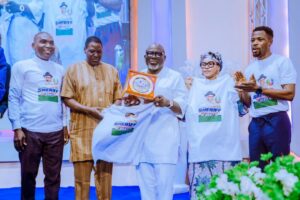
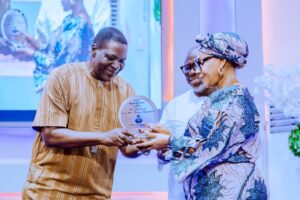
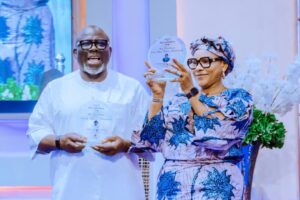
It was an evening of colour, camaraderie and celebration on Thursday in Asokoro, Abuja, as the University of Ibadan Alumni Association (UIAA) Worldwide hosted its 2025 Celebration of Excellence and Award Ceremony—an event that brought together towering figures in academia, politics, diplomacy and faith.

Presiding over the ceremony was the Chancellor of the University of Ibadan and Sultan of Sokoto, His Eminence Alhaji Muhammad Sa’ad Abubakar III, CFR, who delivered a profound message of unity and peaceful coexistence. Contrary to the negative narratives suggesting otherwise, the Sultan reaffirmed that Nigeria remains a nation where religious tolerance not only exists but thrives.

“We must continue to show love to one another, regardless of religion, tribe or ethnicity,” he said. “God did not make any mistake creating us into different tribes and nations. He brought us together to understand one another. Understanding is far more important than mere toleration.”

In a warm and personal reflection, the Sultan revealed his longstanding friendship with Most Rev. Dr. Matthew Hassan Kukah, Bishop of the Sokoto Catholic Diocese, noting humorously that many Nigerians have no idea how close they are.
“Kukah’s church is just three minutes from my palace. Bishop has access to the palace like any other well meaning person. He comes over often, and we sit and drink fura together,” he said, drawing laughter from the hall. “Even Cardinal Onaiyekan has joined us in Sokoto. People don’t know how deep our relationships go.”

To further show you how close we are working, recently i took part in the commissioning of an ICT training center built by Afe Babalola in his compound together with former President Obasanjo.

He urged Nigerians everywhere to cultivate understanding, patience and mutual respect—values he said are indispensable for building a peaceful and prosperous nation.

While congratulating the awardees for being found worthy of recognition by Alumnus of the best University in Nigeria, He said as Chancellor of the insitution, he made sure he attended the occasion despite his tight schedules.

He enjoined the Alumnus to continue to cement the cord of relationships among them and the University and keep faith with the values of the Premier University.

The Sultan emphasized the need to foster and strengthen unity in Nigeria despite the diversity in religion, tribe and culture.

A Night of Distinction and Honours

The 2025 UIAA Celebration of Excellence featured six carefully curated award categories, honouring individuals and institutions whose careers exemplify excellence, service and nation-building.

Worthy Ambassador Award

1. Prof. Ibiyemi Ibilola Olatunji-Bello

2. Rt. Hon. Pascal Lord-Michael Adigwe

3. Engr. Abraham Oshadami

4. Hon. Jerry Alagbaoso


Most Distinguished Alumnus Award

1. Dr. Onye Godfrey Achilihu

2. Most Rev. Dr. Alfred Adewale Martins

3. Chief (Mrs.) Victoria Olufunmilayo Awomolo (SAN)

4. Dr. Mohamed Juldeh Jalloh

5. Prof. Benedict Okey Oramah


Lifetime Achievement Award

1. Sen. Dr. George Akume

2. Sen. Chris Ifeanyichukwu Adighije

3. H.E. Chief Michael Ayegbeni Oghiadomhe

4. H.E. Ambassador Joe Keshi

5. Dr. Taofiq Mabayoje Salisu

6. Chief John Nnia Nwodo

7. Prof. Iya Abubakar

8. HRH Eze (Sir) John O. Nwosu

9. Mr. Adebayo Oludare Awosemo

10. Most Rev. Dr. Matthew Hassan Kukah

11. Sir (Dr.) Mike Mbama Okiro


Meritorious Service Award

Hon. Olatunji Bello

Alumnus of the Year

Prof. Is-haq Olanrewaju Oloyede, Registrar of JAMB

Corporate Awards of Excellence

1. Nigerian Communications Commission (NCC)

2. Joint Admissions and Matriculation Board (JAMB)

3. Arise Television

Awardees Echo the Sultan’s Call for Unity

Several award recipients, in their goodwill messages, aligned with the Sultan’s theme of unity and collective responsibility.

“Life itself is an award,” one honouree remarked. “This recognition encourages us to contribute more to our communities and society.”

Another recipient emphasized, “National greatness does not rest solely with those in office; it comes from the collective contributions of each one of us.”

Speakers also highlighted the need for inclusiveness, collaboration, and internal reconciliation across Nigeria and West Africa.

“With limited resources, the challenge is great, but collaboration is the way forward. Pointing fingers will not build the nation, working together will.”

The atmosphere was charged with optimism as stakeholders expressed confidence that the renewed commitment of leaders, especially those being honoured, would translate into positive change in the country.

A Double Honour for Arise News

The night also shone brightly for Arise Television. Its Managing Director, Mr. Bayo Awosamo, received a Lifetime Achievement Award, while the station itself clinched a Corporate Award of Excellence, marking a distinguished double win.

The 2025 UIAA Celebration of Excellence came to a close with resounding applause, a renewed sense of national hope, and a shared conviction that Nigeria’s brightest days lie ahead, anchored on unity, tolerance and purposeful leadership.

Delta 2027: Pros and Cons For Ukwuani LGA

The political landscape of Ukwuani Local Government Area (LGA) in Delta State is poised for significant developments as the 2027 elections approach. Several factors contribute to the evolving dynamics, including ethnic representation, party affiliations, and local leadership initiatives.

Ukwuani is home to the second largest ethnic group in Delta State, which provides a substantial base for political mobilization and influence within the state. The prominence of Ukwuani individuals in various fields both domestically and internationally enhances their political leverage, potentially impacting electoral outcomes and policy decisions in 2027.

The political scene in Ukwuani LGA has been marked by recent upheavals, notably within the People’s Democratic Party (PDP). A mass resignation of 84 members from the PDP has sent ripples through the political fabric of the area, indicating potential shifts in party loyalty and the emergence of new political alliances. This development could lead to a reconfiguration of political strategies and alignments as parties vie for dominance in the upcoming elections.

Prominent figures like Mr. Ossai Udom have been vocal about the need for unity and progress within the Ndokwa/Ukwuani Federal Constituency. Such calls are crucial as they aim to consolidate efforts and foster collaboration among constituents, which could be pivotal in shaping the political prospects of Ukwuani LGA in 2027. The emphasis on unity may help mitigate internal conflicts and strengthen the community’s bargaining power in state politics.

The All Progressives Congress (APC) has been actively positioning itself ahead of the 2027 general elections. Strategic meetings and stakeholder engagements have been conducted to bolster the party’s presence and influence in Ukwuani. This proactive approach suggests that the APC is keen on capitalizing on the current political climate to expand its foothold in the region.

Under the leadership of Barrister Ajede Possible, Ukwuani LGA has demonstrated a commitment to development and prosperity. Such profound initiatives not only enhance the socio-economic conditions of the area but also serve as a platform for political engagement and support. Effective local governance can significantly influence voter sentiment and political outcomes, making leadership a critical factor in the 2027 elections.

In a nutshell, Ukwuani LGA’s political prospects for 2027 are shaped by ethnic representation, party dynamics, calls for unity, strategic positioning by political parties, and local leadership initiatives. These elements collectively contribute to a complex and evolving political environment that will play a crucial role in determining the future direction of the area within Delta State.

Anioma State: Enuenweosu Reacts To Traducers, Maintains The Future Is Not Seen Through The Cloud Of Bitterness

A progeny of Late Okwa Christopher Enuenweosu, the foremost Ndokwa Commissioner for Finance of old Bendel State in mid 70s, and an Advocate of Anioma State creation, Chief Ifeanyi Kingsley Enuenwosu (aka Sen. Rich Kay), has swiftly reacted to naysayers over the chances of Anioma State creation.

In a rejoinder to the article tagged “My Prophecy Came Too Soon” by one of Ndokwa’s academic finests, Professior Steve Agwo Okecha, Enuenweosu who is an advocate of Anioma State Progess and Unity posited that in every generation, voices arise, some to illuminate the path of progress, others to cast shadows over the aspirations of the people. “Prof. Steve Agwo Okecha, in his recent publication has chosen the latter path. Yet, history reminds us that when a man mistakes pessimism for wisdom, he often becomes a prophet only to himself”, the Anioma Advocate remarks.

Enuenweosu further posits that long-standing bitterness cannot be mistaken and misconstrued as foresight, and that cynicism is not prophecy.

He although conceded that Prof. Okecha is indeed a garment of intellectual superiority, reminding us repeatedly of his “exposure” and ability to “read the rules of the game, but contrast that real education is not demonstrated through condescension, but measured by service, contribution, and a demonstrable legacy.

Speaking further, Enuenweosu posits that Ndokwa Nation has not felt the impact of the abundant exposure from her people in the school of thoughts, but criticism and bitterness against well-meaning people and leader.

He reveals that it is no secret that the Professor’s displeasure grows as Senator Ned Nwoko continues to rise, delivering tangible contributions, initiating national conversations, and spearheading a historic push for Anioma State. “When a man who has done little sees another doing much, bitterness becomes his philosophy.”: Enuenweosu enthused.

He submitted that Senator Ned Nwoko has done what countless commentators and armchair critics have failed to do for decades, placed Anioma State Creation at the centre of national discourse, secured endorsements, mobilized the people, and set the foundation for a referendum, adding that no amount of intellectual disdain can extinguish the light.

As a charge to his people, Enuenweosu urged that no one no matter their academic title, be allowed to mislead the people into despair, nor convince the people that striving for progress is chasing shadows.


Pirah Hails Oborevwori for Delivering Historic Trans-Warri–Ode-Itsekiri Road Project

Former Delta State Commissioner, Mr. Omamofe Pirah, has expressed profound appreciation to the Executive Governor of Delta State, Rt. Hon. Sheriff Oborevwori, for the successful completion of the historic 20.95 km Trans-Warri–Ode-Itsekiri Road, featuring 15 bridges of various spans, a milestone achieved 19 years after the project was initially awarded.

In a statement on Thursday, Pirah described the accomplishment as “a monumental breakthrough and a long-awaited blessing for the Itsekiri nation.” He commended Governor Oborevwori for demonstrating uncommon political will, financial discipline, and an unwavering commitment to inclusive development.

According to him, the completion of the project has not only ended decades of uncertainty but has also transformed a major infrastructural dream into reality. He noted that the Itsekiri people, who have yearned for this connection for nearly two decades, now have every reason to celebrate.

Pirah called on the entire Itsekiri nation to rally round Governor Oborevwori and support his second term bid in 2027, stressing that the Governor’s achievements in barely two years are clear indicators of continuity, stability, and greater dividends of democracy.

The former Commissioner also extended warm congratulations to the immediate past Governor, His Excellency, Dr. Ifeanyi Arthur Okowa, on his recent appointment by President Bola Ahmed Tinubu, GCFR, as the Lead Coordinator, South-South, of the Renewed Hope Initiative.

Pirah described Okowa’s appointment as “well-deserved and reflective of his proven leadership, experience, and enduring commitment to national development.”

He expressed confidence that Dr. Okowa would bring his trademark wisdom, humility, and administrative competence to bear in advancing the objectives of the Renewed Hope Initiative for the collective benefit of the South-South region.

Oborevwori Presents An Ambitious Budget, Reels Out Blueprint To Consolidate The More Agenda


facebook sharing buttonDelta State Governor, Rt Hon Sheriff Oborevwori, last Wednesday presented the 2026 Appropriation Bill to the State House of Assembly, laying out a blueprint for an accelerated progress under his administration’s MORE Agenda.

Aptly christened the “Budget of Accelerating the MORE Agenda,”

The N1.664 trillion fiscal plan marks a pivotal moment in Delta’s governance, underscoring Oborevwori’s unwavering commitment to transformative infrastructure, human capital development, and inclusive growth for the state.

With an unprecedented 70 percent allocation to capital projects—amounting to N1.165 trillion—this budget not only eclipses the 2025 appropriation by a staggering 70 percent in capital spending but also signals a bold shift toward long-term investments that promise to reshape the state’s socio-economic landscape.

The presentation, conducted in the hallowed chambers of the State Assembly Complex in Asaba, was a constitutional ritual pursuant to Section 121 of the 1999 Constitution (as amended). Yet, it transcended mere formality, it was rather an undeniable testament of hope amid Nigeria’s evolving economic recovery. Governor Oborevwori, drawing from projections of a 3.9 percent national GDP growth in 2026, painted a picture of optimism fueled by rising oil revenues, stabilizing fiscal policies, tax reforms, and concerted federal initiatives against insecurity. These national tailwinds, he argued, provide the perfect backdrop for Delta to surge ahead, fostering inclusive and sustainable growth while minimizing debt and optimizing resource management.

As already known, the MORE Agenda— an acronym for Meaningful Development, Opportunities for All, Realistic Reforms, and Enhanced Peace and Security—has been the guiding mantra of Oborevwori’s tenure since assuming office in May, 2023. Launched as a covenant with Deltans, it emphasizes tangible progress in infrastructure, education, health, agriculture, and social welfare. The 2026 budget’s christening as the “Budget of Accelerating the MORE Agenda” should not be seen as a mere nomenclature; rather it actually encapsulates the administration’s intent to build on early successes which have been recorded and propel the state into a new era of prosperity.

By earmarking 70 percent to capital expenditure, Oborevwori is effectively doubling down on this agenda, prioritizing bricks-and-mortar projects over routine operational costs. The allocation ratio—N499 billion (30 percent) for recurrent expenditure versus N1.165 trillion for capital—represents a strategic pivot, ensuring that the bulk of resources fuels visible, enduring developments rather than short-term sustenance.

This ambitious budget signifies a profound determination to “do MORE” in every sense. In a state rich in natural resources yet grappling with underdevelopment challenges, such a focus promises to bridge gaps that have long hindered progress. It aligns seamlessly with the MORE Agenda’s pillars: accelerating infrastructure renewal to connect communities, enhancing human capital through education and health investments, fostering social cohesion via poverty alleviation programs, and bolstering security for a stable environment conducive to growth.

Critics might argue that recurrent spending, at 30 percent, could strain administrative functions, but Oborevwori’s projections account for inflationary pressures and worker welfare, with personnel costs pegged at N185 billion, overheads at N204 billion, and social contributions at N110 billion. This balanced restraint underscores fiscal prudence, allowing capital injections to drive multiplier effects—job creation, economic stimulation, and improved quality of life.

Delving into revenue projections, the budget anticipates a robust influx, reflecting both national reforms and state-level innovations. Statutory allocations, including mineral derivation, are forecasted at N720 billion, comprising 43.28 percent of total revenue and marking a 23.75 percent increase from 2025. This surge stems largely from the fuel subsidy removal, which has bolstered federal disbursements to oil-producing states like Delta. Internally Generated Revenue (IGR) is set to soar to N250 billion, an 86.5 percent jump, thanks to professionalized collection mechanisms and an expanded tax base. VAT remittances are projected at N120 billion, benefiting from enhanced national administration, while capital receipts are conservatively limited to N25 billion to uphold a zero-borrowing stance—a hallmark of Oborevwori’s debt-averse philosophy.

Rounding out the revenue mix, N489 billion from savings and oil revenue recoveries highlights the administration’s emphasis on fiscal discipline, turning past efficiencies into future investments. These revenues will power a sectoral allocation strategy that mirrors the MORE Agenda’s holistic vision. Expectedly, infrastructure takes the lion’s share, with the Ministries of Works (Urban Highways and Rural and Riverine Roads) receiving a combined N450 billion. This funding will expedite strategic road networks, flyovers, and connectivity projects, addressing perennial challenges like flooding and urban congestion.

In Asaba, the Delta State Capital Territory Development Agency gets N20 billion to combat environmental issues and expand infrastructure, while a parallel N20 billion allocation to the Warri, Uvwie, and Environs Development Agency to enable it continue the transformative works in the oil-rich hub, including massive road and flyover initiatives that are already reshaping the region’s economic vitality.

Education and health, cornerstones of human capital development, are not overlooked. With N105.086 billion for education, the budget aims to enhance access to quality learning across primary, secondary, and tertiary levels, building on achievements like renovated schools and empowerment programs. Health receives N50.067 billion to upgrade 441 primary healthcare centers, 65 general hospitals, and three tertiary facilities, ensuring broader coverage and better outcomes in a post-pandemic world. These planned investments signify Oborevwori’s resolve to nurture a healthier, more educated populace, directly tying into the MORE Agenda’s “Opportunities for All” pillar.

Agriculture, energy, and social protection receive targeted boosts: N10 billion for food security and agro-investments to bolster Delta’s agrarian potential; N16 billion for energy, including a multi-grid template to improve electricity supply; and N20 billion for social interventions to uplift vulnerable populations.

Additionally, N100 billion is earmarked for direct interventions across all 25 local government areas, averaging N4 billion per LGA—a decentralized approach that promotes equitable development and grassroots empowerment.

Security remains a non-negotiable priority, with commitments to deploy drones, surveillance tech, and sustained support for agencies. This aligns with the “Enhanced Peace and Security” aspect of MORE, ensuring a safe environment for investments and daily life.

As the budget now lies before the Delta State House of Assembly, expectations are high for a collaborative, people-centered legislative process. Speaker Rt. Hon. Emomotimi Guwor, in his welcome remarks, hailed the presentation as a reaffirmation of the government’s covenant with citizens, praising Oborevwori’s strides in flyovers, roads, healthcare, education, and empowerment. Guwor’s commendation of the governor’s approval of the Consolidated Legislative Salary Structure (CONLESS) and the construction of permanent offices for the Assembly Service Commission underscores a harmonious executive-legislative relationship, fostering an environment for swift yet thorough scrutiny.

The Assembly’s role is crucial: it must dissect the bill, ensuring alignments with public needs, transparency, and fiscal realism. Led by the House Committee on Finance and Appropriations, chaired by Hon. Marilyn Okowa-Daramola, the review process will likely involve public hearings, stakeholder inputs, and amendments to fine-tune allocations. Deltans can expect enhancements that amplify the budget’s impact—perhaps increased funding for youth employment, environmental sustainability, or digital innovation—while guarding against waste. Oborevwori’s determination to up the ante in the development trajectory of Delta State can be seen through this budget. His call for expedited passage reflects urgency, yet the Assembly’s assurance of a “thorough and timely review” promises accountability.

For the people of Delta, this budget means more roads linking farms to markets, more schools equipping the next generation, more hospitals saving lives, and more opportunities eradicating poverty. It’s a budget that doesn’t just allocate funds; it invests in dreams, securing a prosperous and safe Delta where no one is left behind.

Oborevwori’s resolve to “do MORE”—more infrastructure to drive growth, more reforms for efficiency, more opportunities for equity, and more security for peace promises a fiscal year that could redefine Delta’s trajectory – that with vision and prudence, all ambitious goals are within reach. This is not just a financial document; it’s a roadmap to a stronger Delta, crafted with the people’s welfare at its heart.

TRENDING

LATEST