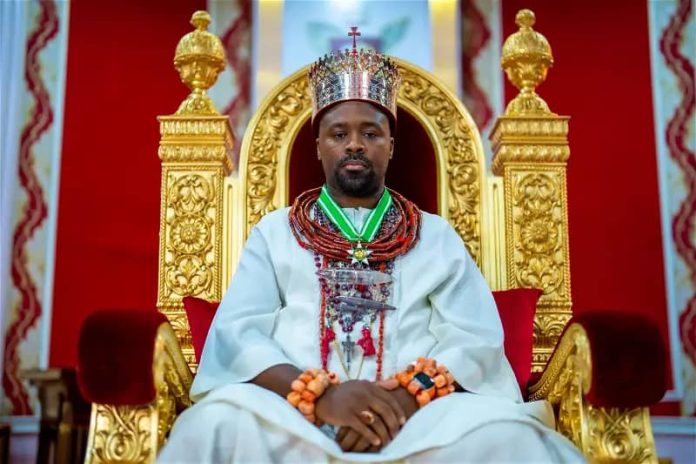
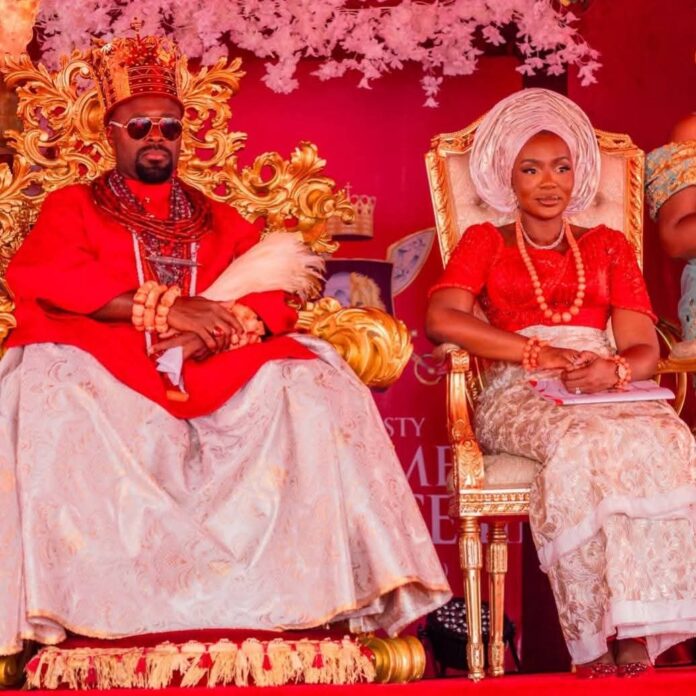
The Olu of Warri, His Majesty Ogiame Atuwatse III, CFR, has reflected on his four years on the throne, declaring that his reign is anchored on unity, cultural preservation, and a vision of sustainable development for the Itsekiri nation.
Speaking in an exclusive interview with select journalists at his palace in Warri as part of activities marking his 4th coronation anniversary, the revered monarch described his journey so far as “a walk of faith,” guided daily by divine grace.
“My journey on the throne has been very interesting. We take it one day at a time; God helps us and gives us grace for each day. No two days are the same,” he said.
On his vision of a unified Kingdom, looking ahead, Ogiame Atuwatse III emphasized that the foremost duty of a king is to build unity and exercise dominion in a benevolent, not tyrannical, manner.
“Every king looks forward to a unified house. That is why it is called a kingdom. The king is supposed to have sway, to have dominion — but not in a selfish or controlling way. It should be generous, benevolent, and elevated,” he explained.
Responding to a question on safeguarding language and culture, and on the challenge of sustaining the Itsekiri language, especially among children, the monarch expressed concern over the global erosion of indigenous identities due to globalization, commerce, and migration.
“We are seeing the gradual decline of our languages across Africa. To preserve identity and culture, we must find creative ways to swim against the tide,” he said, adding that incentives beyond money must be developed to encourage the younger generation to embrace their mother tongue.
He stressed that cultural preservation must be made attractive:
“This generation must see that culture and tradition are cool. They need to see it as their identity, something worth preserving and participating in.”
On the newly launched Itsekiri Trust Fund for Long-Term Development, the Olu clarified the recent launch of the Itsekiri Trust Fund, describing it as a vehicle for “sowing seeds of development” rather than a platform for cash handouts.
“This is not palliative, it is not about sharing money. Too often, we eat the seed instead of planting it. This Fund is about planting, tending, and patiently waiting for the harvest that will benefit our people for generations to come,” he noted.
On the question of balancing modernization with tradition, the monarch urged Nigerian youths to embrace media and storytelling as tools to reshape narratives.
He pointed to countries like Japan, Thailand, and the Middle East as examples where tradition thrives alongside technological advancement.
“Narratives shape identity. If our young people see culture as progressive and relevant, they will own it. Tradition is not incompatible with modern life — it is actually the foundation of identity,” he said.
Reflecting on the challenges of kingship, Ogiame Atuwatse III likened the experience to navigating stormy seas, an apt metaphor for a monarch whose people are riverine.
“Smooth seas do not make good sailors. We are a people of the water; the throne is not meant to be easy. But God has not brought us this far to drown us. Every storm chisels us for greater glory,” he said.
As the Itsekiri nation celebrates his four years on the throne, the Olu’s message was clear: unity, patience, cultural pride, and a forward-looking vision remain the pillars of his reign.
The 4th coronation anniversary of His Majesty Ogiame Atuwatse III, CFR, the Olu of Warri, reached a historic climax on Thursday with the announcement of the Iwere Trust Fund (ITF), a landmark initiative designed to fast-track the socio-economic growth of the Itsekiri people and their ancestral homeland.
Unveiling the Fund before thousands of Itsekiri sons and daughters, traditional leaders, and well-wishers at his Aghofen Palace in Warri, Delta State, the revered monarch declared that true progress for the Itsekiri nation must be championed by Itsekiris themselves.
To set the tone, Ogiame Atuwatse III, who will serve as Chairman of the Foundation, made a personal donation of ₦750 million, signaling what he described as “leadership by example.”
“It is only the Itsekiri people that can truly develop themselves and their ancestral homeland. I have sown my seed of commitment with ₦750 million, and I now call on every well-meaning Itsekiri across the world to join me in watering these seeds of collective development,” the Olu declared to resounding applause.
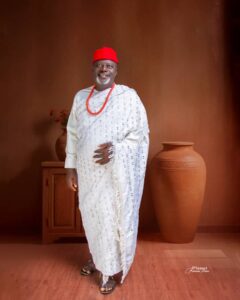
Olu of Warri, Ogiame Atuwatse III, CFR
The Olu explained that the Fund will serve as a platform to mobilize resources and execute transformative projects that will directly benefit Itsekiri communities, reflecting his vision of turning promises of progress into tangible realities.
Observers say the creation of the ITF is not just a symbolic gesture but a defining moment in the monarch’s reign, marking him out as a king determined to match words with action. For many, it was a perfect climax to the 4th anniversary celebrations, a gift of hope and a rallying call for self-driven development.
The announcement drew thunderous ovations, with the palace grounds erupting in chants of “Oba-oke, Oba-omi, Ogiame Suoooii!” as the Itsekiri nation celebrated yet another milestone under their dynamic king.
With the launch of the Iwere Trust Foundation, Ogiame Atuwatse III has once again reaffirmed his vision of a prosperous Itsekiri nation built on unity, responsibility, and homegrown development.
Warri went agog on Thursday as Delta State Governor, Rt. Hon. Sheriff Oborevwori, hailed the Olu of Warri, His Majesty Ogiame Atuwatse III, CFR, as a monarch who has turned his kingdom into a beacon of peace, unity and prosperity.
Speaking at the colourful homage-paying ceremony to mark the monarch’s 4th Coronation Anniversary at the palace grounds in Aghofen, the governor said Atuwatse III’s reign since 2021 has restored harmony in Iwere land, revived cultural pride, and placed Warri on the global map.
“Your Majesty, you have brought peace, equity and justice. You have attracted investments and made Warri an economic hub. Your reign is truly a blessing to Delta State,” Oborevwori declared.
The governor also promised that his administration will continue to support traditional rulers, stressing that the Olu’s stability has helped government push development and empower communities.
A Monarch with Global Vision
He praised the king’s global outlook, which has opened doors for international partnerships and opportunities, aligning with his MORE Agenda for growth and prosperity.
Celebration of Culture and Loyalty
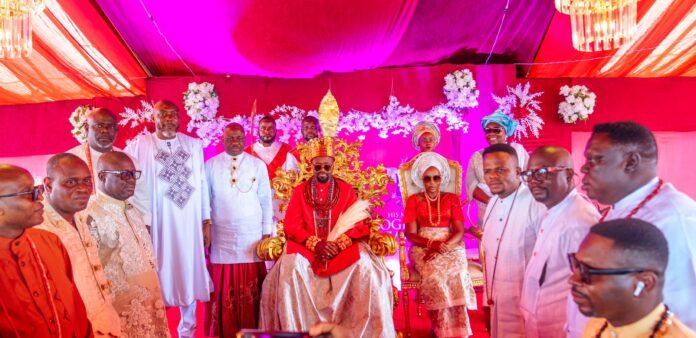
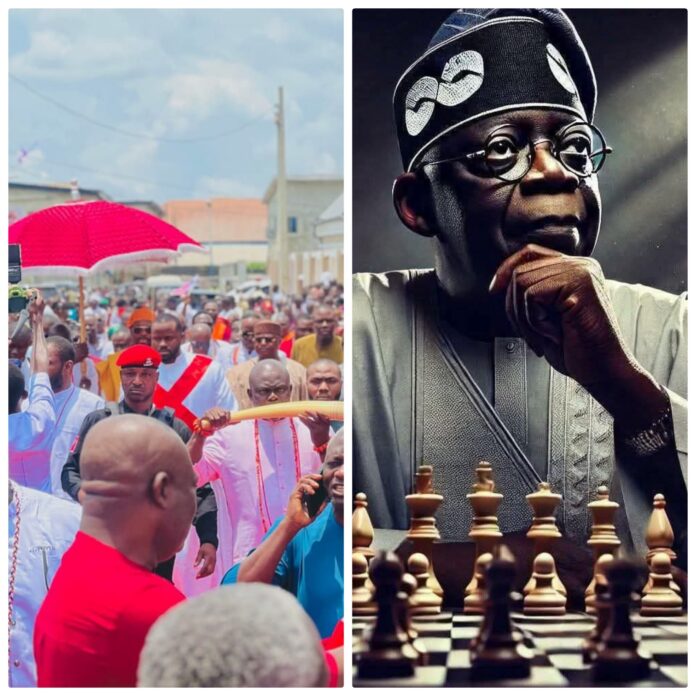
The palace ceremony was a carnival of colours, with chiefs, dignitaries, and Itsekiris from across the world paying homage in music, dance and splendour.
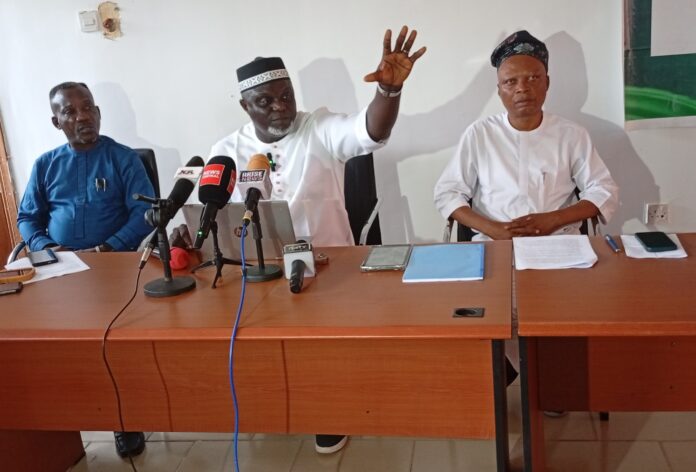
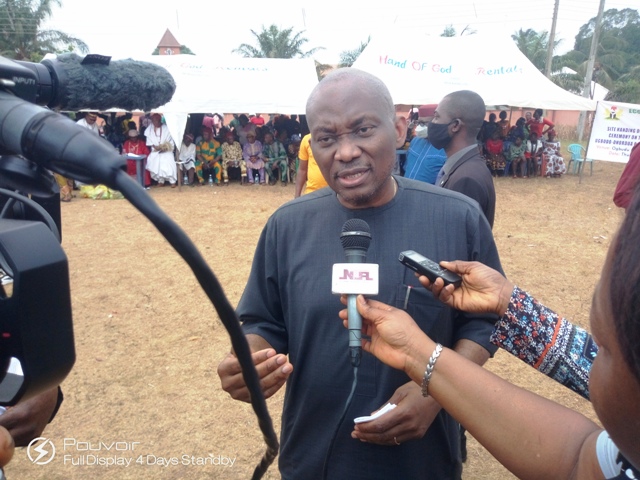
The Executive Chairman of Delta State Universal Basic Education Board (D-SUBEB), Hon. Samuel Oghenevwogaga Mariere, today came out swinging against what he called “false, malicious and baseless” allegations of bribery rocking the Board.
Speaking at a press briefing in Asaba, Mariere dismissed claims that contractors were being forced to part with ₦100,000–₦300,000 in kickbacks as “cheap blackmail” aimed at distracting him from delivering results.
SUBEB
“At no time did I or any SUBEB official request or collect money from any contractor. Our books are open. Our records are clean. And the contractors themselves have confirmed it,” he said firmly.
To bury the rumours, Mariere said an emergency meeting was called with contractors on Tuesday. In front of everyone, several contractors reportedly declared they had never paid any “percentage” or under-the-table money for projects, certification, or payments.
“That testimony is on record. The truth has spoken louder than lies,” he told journalists.
Mariere then shifted gears, reeling out what he called SUBEB’s “undeniable scorecard” for the quarter.
Projects: 90% of approved projects already completed, with contractors duly paid through official channels.
Enrolment: 821,827 children now in Delta’s public basic schools.
Teacher Training: Over 5,500 teachers retrained in modern classroom methods.
Infrastructure: 162 brand new classrooms, 491 renovated, 164 toilets, 22 school fences, 5 solar-powered boreholes, plus new staff quarters and hostel facilities.
Learning Tools: 167,707 textbooks, nearly 2,000 tablets, 28 laptops, 64 smart boards, and 10,000 teaching aids rolled out.
Equity Push: More than 2,000 out-of-school children brought back to classrooms.
“This is what we have been doing while others spread lies. These are results you can see in every community,” he fired.
Mariere said D-SUBEB operates a zero-tolerance policy for corruption, insisting that all procurement goes through competitive bidding and internal audits.
“Our files, inspection logs, and payment records are open for UBEC, the State Government, the media, and even civil society. Sunlight is our policy. Anyone can check,” he declared.
The SUBEB boss promised even more: completing the Orogun SMART School project, deepening e-procurement, and expanding support for riverine schools.
“We will not be distracted. Our focus is on classrooms, teachers, textbooks, safety, and results for Delta’s children. That is the only truth that matters,” Mariere said to thunderous applause.
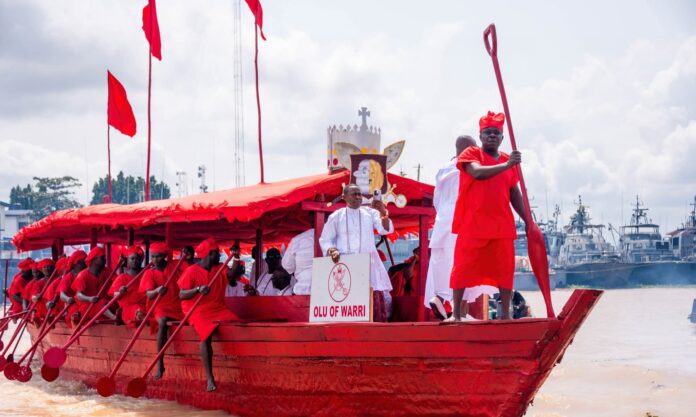
The Warri River came alive yesterday in a spectacular fusion of tradition, culture, and royal grandeur as the Itsekiri Nation celebrated the 4th coronation anniversary of His Majesty, Ogiame Atuwatse III, CFR, the Olu of Warri Kingdom.
The highlight of the day was the Mini Boat Regatta, a vibrant aquatic pageantry that reaffirmed the deep-rooted bond between the Itsekiri people and their ancestral waters. Under the golden rays of the sun, the regatta was not just a sporting display but a cultural testament, an ode to unity, heritage, and the enduring strength of the throne.
A King Beyond the Crown
The celebration echoed the truth that “a king is not made by crown, but by the blood of his ancestors, the strength of his people, and the wisdom of the land.” This was felt as Ogiame Atuwatse III sailed with majestic grace across the waters, his arrival crowned with splendor. His entourage shimmered upon the waves, their presence a mirror of his power and dignity.
When the Olu stepped ashore at Ode-Itsekiri, the ancestral home of the Iwere people, the atmosphere thickened with reverence. Drums rolled, chants soared, and the air was charged with awe, this was more than a return; it was the reaffirmation of royal presence and cultural pride.
The Regatta: Tradition Meets Thrill
Dozens of decorated boats sliced through the waters in thrilling displays, their rowers chanting songs of heritage in rhythm with each stroke of the oar. Among the showpieces was a powerful Yamaha Jet Boat, “Olokun-1,” owned by Captain Okpeyo (Atsọ-fifẹn), which drew loud cheers as it danced effortlessly across the river’s surface.
The regatta was more than spectacle; it was a living tapestry of Itsekiri history, a reenactment of the people’s relationship with their waterways, both as a source of livelihood and a cultural anchor.
A Festival of Unity and Heritage
The day’s celebrations were woven with symbolism. From the chants of the rowers to the glittering procession that followed the king, the atmosphere spoke of unity and continuity. It was a reminder that the Olu’s reign is not just a political institution but a custodian of heritage and a bridge between past and future.
As the sun set on the riverbanks, the ripples of the regatta lingered in the hearts of the people. The 4th Coronation Anniversary of His Majesty Ogiame Atuwatse III was not only marked by pageantry but also by a reaffirmation: that the throne of Warri remains a beacon of pride, strength, and cultural identity for the Itsekiri Nation.
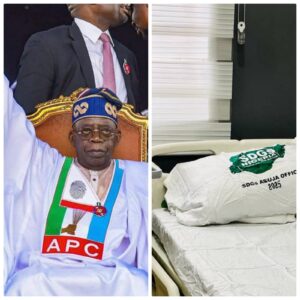
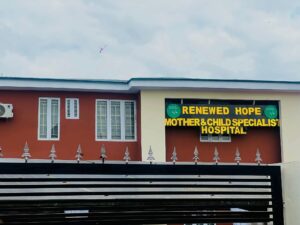
Warri has a brand-new lifeline. The Federal Government on Tuesday unveiled the 80-bed Renewed Hope Mother and Child Specialist Hospital in Ugbuwangue, a state-of-the-art facility built to save mothers and babies.
Governor Sheriff Oborevwori, represented by his Chief of Staff, Hon. Johnson Erijo, hailed the project as “a beacon of hope and a critical step forward for Delta healthcare.” He promised the state would fully integrate the hospital into its system and keep it running at top standards.
The Olu of Warri, Ogiame Atuwatse III, pulled no punches:
“Wealth is meaningless without health. Protect this hospital as your own. Keep the access roads clear, emergencies won’t wait for traffic.”
Bola Ahmed Tinubu
He praised President Bola Tinubu for backing the project and urged the community to safeguard it for generations.
For Princess Adejoke Orelope-Adefulire, the President’s SSA on SDGs and the driving force behind the hospital, the day was about more than bricks and mortar:
“This hospital is not just a building. It is a promise fulfilled, a sanctuary of care, and a symbol of renewed hope.”
Renewed Hope Mother and Child Specialist Hospital Ugbuwangue Warri
She noted that the facility, equipped with operating theatres, neonatal units, ICUs, labs, and staff quarters — directly targets maternal and child mortality, one of Nigeria’s toughest health challenges.
The Acting Medical Director of FMC Asaba, Dr. Ekeneam Omo, revealed the hospital had quietly started services in 2024. He pledged dignity and excellence in care but appealed for more support: “We need a CT scan, an ambulance, and more space for diagnostics.”
Adding political firepower, APC National Women Leader Dr. Mary Alile Idele called the hospital “a beacon of hope” but warned it must grow bigger soon. She pressed for uninterrupted solar power to keep services alive.
Warri South Council Chairman Comrade Weyinmi Agbateyiniro summed it up bluntly:
“Until now we only heard about the Renewed Hope Agenda. Today we are seeing it live in Warri.”
With prayers, applause, and fanfare, the Renewed Hope Specialist Hospital was officially opened, a federal gift, a state promise, and a community treasure.
Anioma Association USA, Incorporated, a non-profit socio-cultural organisation of Anioma indigenes resident in the United States of America, has announced that its Maiden Economic Empowerment Award Ceremony will hold on Friday, August 29, 2025, at the NUJ Press Centre, Maryam Babangida Way, Asaba, Delta State, starting at 11:00 a.m. prompt.
The award, which comes in the form of a N500,000 grant to each beneficiary, provides non-repayable funding aimed at alleviating the financial burdens faced by small business start-ups and SME operators seeking expansion. A total of nine beneficiaries, one each from the nine Local Government Areas (LGAs) of Delta North Senatorial District, will receive the empowerment grant.
Announcing the programme in a press statement, the President of Anioma Association USA, Dr. Kpamioseh Anthony Ogbechie, reaffirmed the group’s commitment to meaningful projects. “Our mission remains resolute in fostering the preservation and celebration of our rich heritage. Even as we reflect and renew our shared values of vision and unity, we will continue to embrace the call to serve, mentor, and inspire the next generation for the bigger story of Anioma’s growth,” Dr. Ogbechie declared.
The Vice President of the Association and Chairman of the Empowerment Project Committee, Dr. Samuel Momah, explained that the process leading to the selection of beneficiaries was transparent and thorough. He state that a total of 75 applications were received, out of which 59 met the eligibility criteria and qualified for a ballot process conducted during the Association’s National Summit on July 12, 2025.
Anioma USA
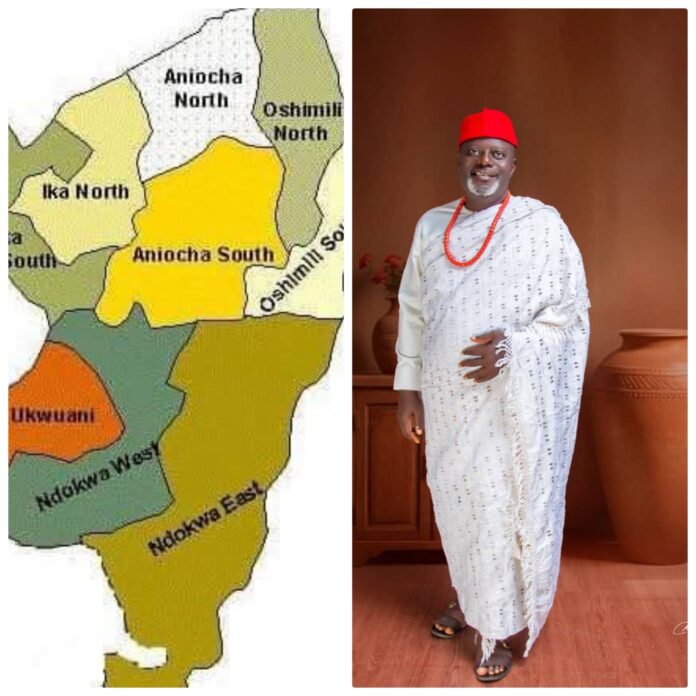
A breakdown of applications received from the nine LGAs shows the following: Aniocha North 15, Aniocha South 6, Ika North 2, Ika South 6, Oshimili North 5, Oshimili South 6, Ndokwa West 4, Ndokwa East 4 and Ukwuani 11.
And the beneficiaries selected include: Isioma Abia-Aniocha North, Roseline Ijebusonma Iwegbu-Aniocha South, Ikechukwu Gift Chekwube-Ndokwa East, Ifeoma Dibia- Ndokwa West, Stephen Ugochukwu Ogodu-Ukwuani, Olise Ogbolu Raphael-Oshimili North, Okonji Nkem-Oshimili South, Joel Nketan-Ika North and Godwin Oyesi Ayuwe-Ika South. Each of the above will receive a N500,000 grant at the ceremony.
A highlight of the event will be the Keynote Lecture titled: “Leveraging Smart Packaging and Marketing for Sustainable Business Success.” The lecture will be delivered by Mr. Godfrey C. Osakwe, Fellow of the Nigerian Institute of Public Relations (NIPR) and Chairman, Delta State Chapter of NIPR. A development communicator, leadership trainer, and brand builder, Osakwe will emphasise the critical role of packaging and marketing as game changers for business visibility and competitiveness in local and global markets.
The ceremony will be graced by prominent royal fathers, including: HRM Obi Emmanuel Ezedimbu Nkebakwu III, Obi of Ugboba and HRM Ayo Isinyemeze, Oloza of Ugbodu. The target audience will include young entrepreneurs, media professionals, policymakers, and thought leaders committed to youth empowerment and the socio-economic development of Anioma and Delta State.
Senator Ede Dafinone attended the public hearing in Ikot Ekpene, Akwa Ibom State, as part of a select group of senators overseeing bills for the creation of new states in the South-South region. Over the course of nearly six hours of deliberations on the first day, Dafinone spoke only once—introducing himself briefly—before remaining silent for the rest of the engagement.
During the session, the bill for the creation of Anioma State was presented and received robust applause. Another proposal for a state for the Itsekiri and Ilaje people also attracted discussion. However, a bill for a state in Akwa Ibom was strongly opposed. Notably, throughout the two-day public hearing held on July 4–5, 2025, in Ikot Ekpene, the bill for the creation of Ethiope State was not mentioned at all. Senator Dafinone neither raised the issue nor made any declaration of support for it.
When a similar public hearing later took place on July 19, 2025, in Yenagoa, Bayelsa State—organized by the House of Representatives—the bill for Ethiope State, sponsored by Hon. Benedict Etanabene of Okpe/Sapele/Uvwie Federal Constituency, finally received attention. By then, however, it had become clear that the initiative had been abandoned by Senator Dafinone himself.
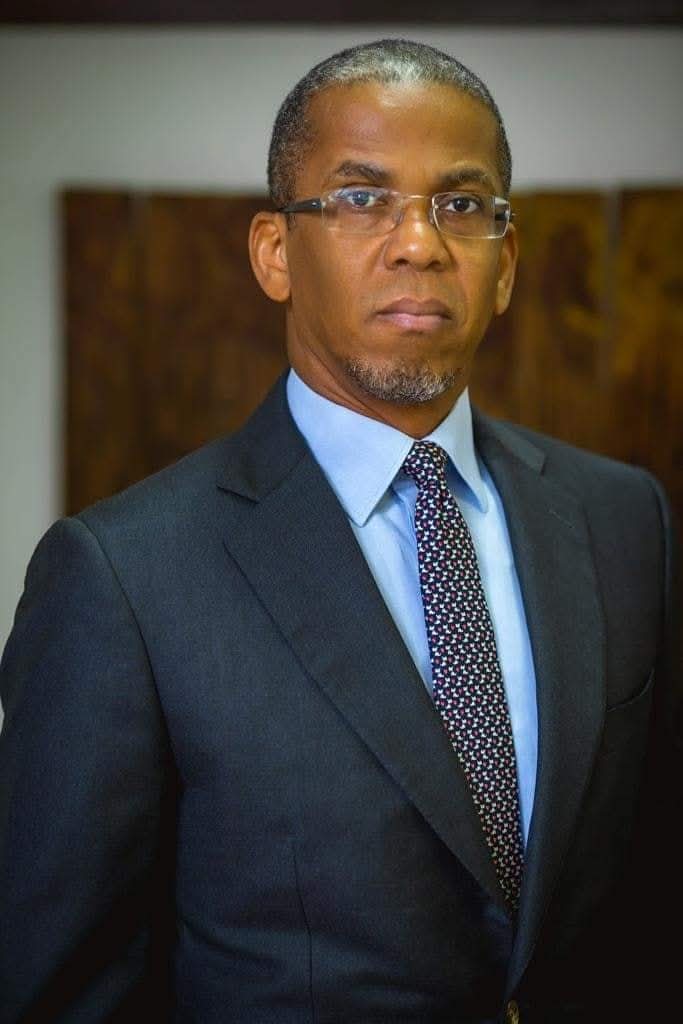
Senator Ede Dafinone
The promoters of Ethiope State had initially approached him to sponsor the bill, but he declined—claiming his prior commitment to Anioma State’s creation prevented him from supporting another. This argument falls flat: there is no inherent conflict between backing Anioma State and advocating for a state that directly serves his own constituents. In fact, his own words underline the contradiction:
“While we qualify for our own state, we stand with our Anioma brothers and sisters. This is not about drawing lines; it is about reimagining the federation with justice at its core.”
If Dafinone, as senator for Delta Central, could see “justice” in Anioma State’s cause but refused to champion Ethiope State for the Urhobo people, one must ask: why should the Urhobo keep him as their senator? If his loyalty lies with Anioma, shouldn’t he move there? More puzzling still is why his defenders attempt to spin his late and half-hearted mention of Ethiope State as some sort of achievement.
A Track Record of Weak Representation
Since assuming office, Senator Dafinone’s tenure has been riddled with flaws—sluggishness, indecision, and a lack of commitment to the Urhobo cause. The Urhobo voice in the Senate, once expected to be loud and assertive, has been muted under his watch. This is uncharacteristic of Urhobos, a people known for being vibrant, outspoken, and uncompromising in defending their interests.
Unlike his peers, Senator Dafinone does not chair any committee. He excuses this by citing the limitations of being a first-term senator. Yet many of his fellow first-term colleagues occupy key positions: Senator Ned Nwoko (Delta North) chairs the Senate Committee on Refinery Maintenance and Probe as well as the Ad-hoc Committee on Crude Oil Theft, while Senator Joel Onowakpo-Thomas (Delta South) chairs the Senate Committee on Local Content.
If lack of experience explains his absence from leadership roles, what then accounts for his lethargy in other areas? Where are his contributions to budget debates, given his acclaimed expertise as a chartered accountant? How often has he amplified the needs of Delta Central on the Senate floor?
Misplaced Claims of Achievement
Some apologists point to constituency projects as proof of his effectiveness. But every senator receives an allocation for such projects; delivering them is a statutory duty, not a mark of excellence. Real achievement comes from attracting additional projects, resources, or benefits to one’s constituency—something Dafinone has not demonstrated.
The Senate is not a training ground; it is a platform for leadership and advocacy. The Urhobo cannot afford to wait while their senator “learns on the job.” In legislative work—debates, oversight, lobbying for appointments, shaping policy, securing funding—the people of Delta Central have seen little to justify Dafinone’s mandate.
A Costly Mistake for Urhobo
The truth is stark: electing Ede Dafinone to the Senate has been a costly mistake. Unlike his late father, Senator David Omueya Dafinone, he lacks the grit, boldness, and combative edge needed to thrive in Nigeria’s political terrain. Accounting credentials may impress on paper, but the Senate demands far more—political will, negotiation skills, and unwavering advocacy.
After more than two years of uninspiring representation, the Urhobo are paying the price. Dafinone’s silence, indecision, and misplaced priorities confirm that he is ill-suited for the role. He does not deserve a second term. The Urhobo need a senator who will fight relentlessly for their cause, ensure their voice is heard at the highest levels, and bring home tangible results—not excuses.
By Dr. Joseph Tedwins Emudainohwo writes from Abraka, Delta State
As a young man growing up in the defunct Bendel State in the 1970s and ‘80s, I read some of Professor Zulu Sofola’s seminal literary works, and I was greatly inspired. I dare say that her plays and essays left a lasting impact on my impressionable mind.
Today, I still remember Sofola’s works like Wedlock of the Gods, King Emene, The Sweet Trap, Old Wines Are Tasty and The Deer and the Hunter, among others. Back in the day, I had no inkling that Professor (Mrs.) Sofola hailed from Aniomaland. But I was in awe of her brilliance and the settings of her plays, especially King Emene and Wedlock of the Gods, which were obviously set in Anioma. I later, in adult life, learnt that Sofola was not only an Anioma daughter from Issele-Uku, she is also Nigeria’s first published female playwright, and Africa’s first female professor of theatre arts. What a shock!
But Sofola is not the only female scholar or woman of influence from Anioma. For instance, Ogwashi-Uku, my community, also gave the world Professor Tess Onwueme: playwright, scholar, environmentalist and professor of English, well-known for her socially engaging, politically conscious and environment-focused plays like Desert Encroaches, The Broken Calabash, Then She Said It, and Banana Leaves, among others. In diplomacy, global affairs, politics and public administration, Ogwashi-Uku, also produced Ambassador Raph Uwechue, one of Nigeria’s finest diplomats. And the list goes on and on.
I hasten to add that from the colonial era to the present day, the Anioma people’s most resounding display of courage, audacity, hope and heroism remains the famous and unforgettable Ekumeku liberation war, a proud chapter in our collective history. For 31 years, between 1883 and 1914, our people made history with Ekumeku as one of the most determined resistance movements against British colonial rule in Nigeria. It was an unparalleled guerilla struggle marked by great courage, secrecy and a deep commitment to freedom. Even though the movement was eventually subdued after over three decades, the bravery of the people of Aniomaland remains a shining example of an uncommon people who refused to surrender their freedom, land, culture and dignity to an invading force.
The truth, and this must be told, is that our heroes and their acts of heroism from time immemorial, are evident everywhere in every part of Aniomaland from Oshimili and Aniocha to Ika, Ukwuani and even in Igbanke, Edo State, where our people are also doing exploits, inspiring hope and proving that greatness knows no boundaries.
I decided to celebrate Anioma, her nobility and a few of her extraordinary women today because of the changing times. And I must say that I was motivated by this immortal saying of our people: “When the big oak tree that once stood tall and majestic, offering shade and shelter to all who came near, dies, where is the sucker that will replace that big tree?”
In all honesty, I have always been bothered by today’s bad politics, driven by greed and avarice. As we all know, unhealthy politics, plagues Delta North today in a way that does not represent who we are.
How long shall we continue to practice cash and carry politics of self-interest and privilege for a few at the expense of the common good?
As politicians, we must ask ourselves what example of integrity, vision, orderliness and selfless service we are truly setting for the young people who look up to us. Must politics still be defined by thuggery, forgery, underrepresentation, imposition, and violence even in this century when the world has become a global village?
Where is that noble spirit of service, empathy, humility, appreciative sympathy and quality representation that once defined the politics of old, especially in our part of Nigeria?
Your guess is as good as mine. But there could not have been a better time to reflect on posterity, and what we will leave behind as mortals who must one day, depart this earth.
I believe, and strongly too, that public service through politics is neither for advantage nor for personal aggrandizement. If you ask me, I insist, and this has always been my position, that politics is the highest form of public service, and every politician in public spaces must be constantly reminded of their duty to serve.
As I write, Iet me add that I am guided by the fact that true leadership is measured not by raw power held or great wealth, but by the lives positively impacted. And without fear of contradiction, let me state that the progress of any nation depends on the character and vision of its leaders.
A couple of days ago, I feted Nigerian youths on International Youth Day, celebrating their achievements and potential with joy and admiration. I was frank about the contributions of young people to Nigeria’s growth and development as a nation. But in doing so, I punctured the long-held and deceptive notion that young people are merely leaders of tomorrow. In truth, the youth we see, are also leaders of today, and as politicians, we must come to terms with that reality.
Again, I made haste to recognize and appreciate the invaluable contributions young Nigerians bring to the table of our national development. “On a day like this, I recognize the value, contributions and dreams of young people, particularly in Nigeria. I also salute the energy, creativity, courage and resilience of these young people today who are contributing their quota everywhere. And this is verifiable through their impact in various sectors. As we all know, our youthful population is driving change and making its mark in various fields of life, including education, technology, music, fashion, sports, literature, entrepreneurship, the arts and even the professions. Nigerian youths in foreign countries are also our veritable ambassadors, projecting the nation’s image beyond our shores, and rewriting all the ugly narratives about Nigeria into stories of hope, resilience and progress. And let me be clear: Nigerian youths are not just leaders of tomorrow; they are the hope and the real change-makers of today. Their great ideas and resourcefulness, I must confess, are reshaping our communities in many ways. And I am glad that they are injecting fresh perspectives into the discourse on politics and governance. Let me add that their talents are enriching our culture, and their courage, inspiring change and a new era of possibilities, progress and consciousness.”
For emphasis, I also addressed, in my goodwill message, the age-long issues of complacency, indifference, ignorance and lack of interest in politics, often ascribed to the Nigerian youth. As far as I am concerned, that belief is not entirely true. And I quote: “It is also gratifying to note that Nigerian youths are fully aware and very much alive to their responsibilities. Until very recently, the average young Nigerian never bothered much about politics and elections, but all that are changing, and very fast too. And we are all happy for these developments. Therefore, I can say with every sense of responsibility that young people now fully appreciate the consequences of electing ill-prepared and bad leaders. So, they are working hard with their informed choices, to break the cycle of poor representation in both the legislative and executive arms of government in Nigeria. They are not only conscious of party politics and political developments; they are also putting measures in place from their different corners of Nigeria, to ensure that votes count. Therefore, no one, no matter how highly placed or connected, can take the Nigerian youth for granted in today’s Nigeria. Even at the risk of sounding repetitive, let me state again that no one is oblivious of the remarkable contributions of young people in Nigeria today, both personally and collectively, to better our country. So, on this International Youth Day, I stand with them, and I will continue to support them as a they build the future and the common world we all deserve. Therefore, I urge them to remain steadfast, conscious and vigilant as we work and pray together for a new dawn that is already within a touching distance.”
These are hard facts about who our young people are, no matter how much we try to discountenance their relevance and the promise they hold for our country.
As we all know, what eventually becomes of a country depends on how it treats its young people and the next generation. And from our antecedents as a people, I believe we are too perceptive to discountenance or underestimate this worldview. Undoubtedly, this is the time to think about our young people, our dear country Nigeria, and the future we hope to leave for our children and generations yet unborn.
Kanma, a lawyer, entrepreneur and politician, writes from Ogwashi-Uku in Delta State.
Delta journalism has been rocked by a storm of outrage as the State Chairman of the Nigeria Union of Journalists (NUJ), Comrade Churchill Oyowe, stands accused of trampling on press freedom and running the council like a one-man dictatorship.
In a shocking display of intolerance, Oyowe last week went on a purge, expelling journalists who dared to criticize his administration from the union’s official WhatsApp group. His victims included respected veteran journalist and former Pointer editor, Julius Oweh; Federal Information Chapel chairman, Comrade Enitan Abel Johngold; and former NAWOJ chairperson, Comrade Patricia Gbemudu.
Their “crime”? Advising Oyowe that his action against the NUJ secretary, Comrade Victor Sorokwu — who is facing allegations of corruption — was unprofessional and a direct attack on freedom of expression.
But rather than listen, Oyowe reportedly “bared his fangs,” acting like a self-styled emperor. He suspended Oweh, Johngold, and Gbemudu — after already removing New Telegraph correspondent Dominic Adewole Igbekoyi and Radio Nigeria’s Oghenero Eghweree.
Outrage has since trailed his action. “This is absurd and ironical,” one furious member said. “Journalists criticize presidents, governors, and ministers every day, and the heavens don’t fall. Why should Churchill Oyowe, a mere council chairman, see himself as untouchable?”
The development has sparked an uproar across media circles, with calls mounting for the NUJ national leadership to intervene before Oyowe drags Delta journalism into outright tyranny.
Observers say his actions have exposed him as unfit for leadership. “If you cannot stand criticism,” one journalist quipped, “then resign. Journalism is not a nunnery where you play mother superior — it’s the beating heart of democracy.”
As the backlash intensifies, one truth is echoing across Delta NUJ: Churchill Oyowe has declared war on press freedom — and the press is ready to fight back.